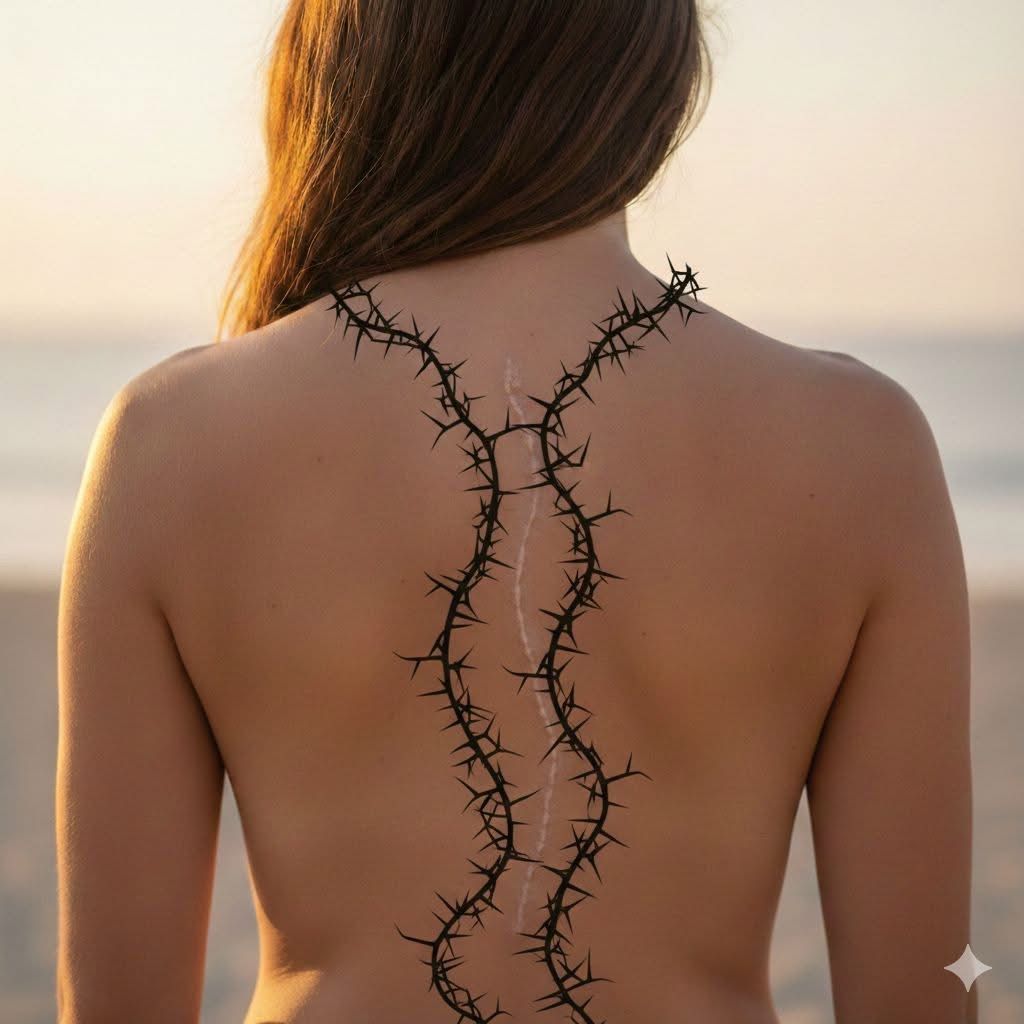
the weight of the curve
Living with scoliosis is like maintaining a silent, exhausting conversation with your own body. It isn’t just a "curved spine"; it is a constant presence—a reminder that your axis doesn't follow the straight line the world expects.
Some days, the pain feels like a deep, dull ache in the muscles, which are forced to work twice as hard just to keep you upright. Other times, it’s a sharp pressure, as if your ribs are searching for space that no longer belongs to them. It’s the stiffness upon waking up and the instinctive, restless search for a sitting position that never quite feels "right."
But perhaps the heaviest part isn't physical; it's the mental toll. It’s the need to calculate your energy before walking long distances or choosing a chair as if choosing a battlefield. It is the frustration of feeling like your own structure is at odds with itself.
Yet, within that struggle, there is a quiet kind of strength—the resilience of learning to carry oneself forward, even when balance feels like a distant concept.
Scoliosis can be a lonely journey, usually invisible to others, yet we continue to find the courage and strength to fight against gravity, and fight against the Weight of the Curve.